
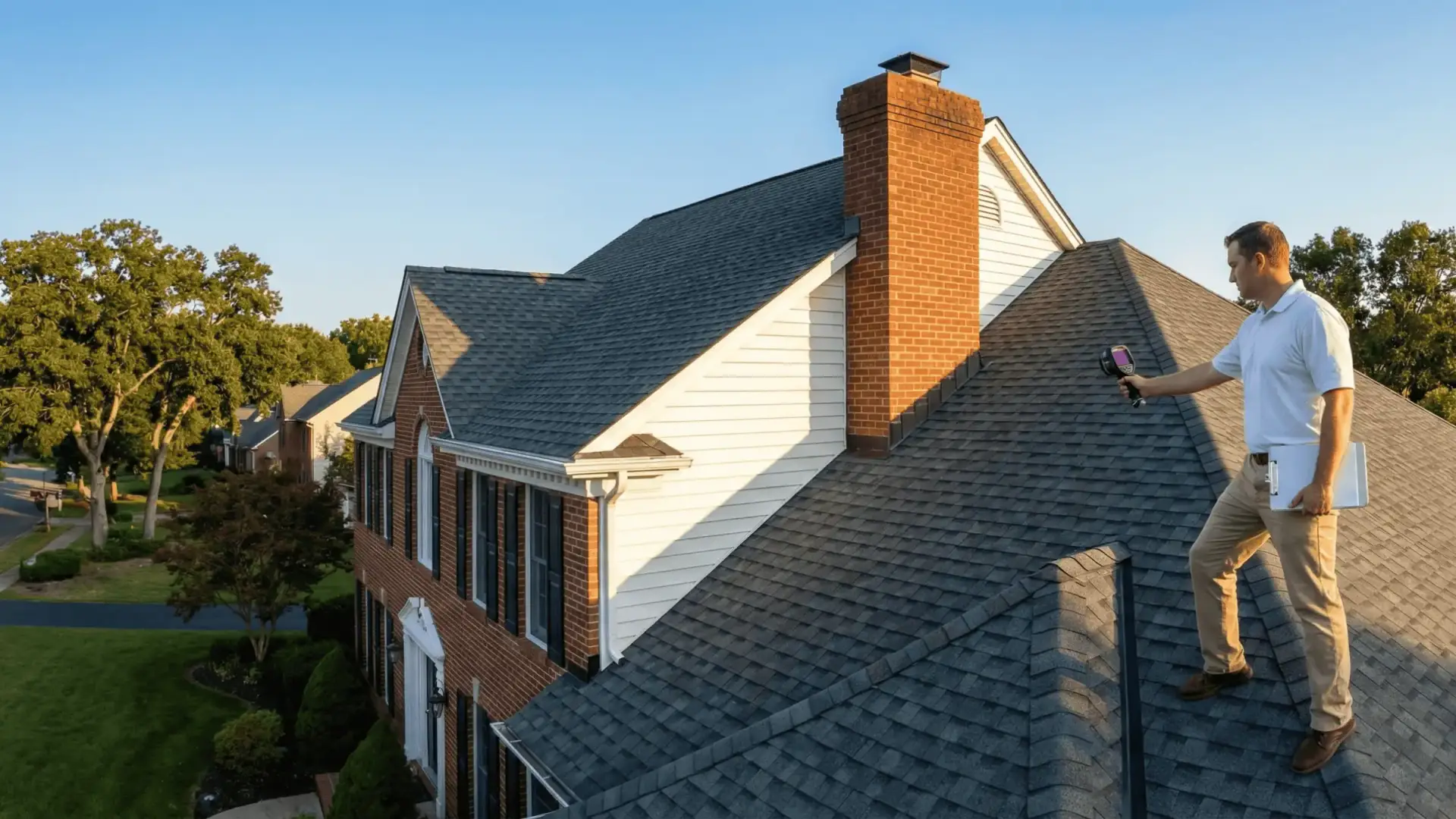
Roof Repair Done Honestly

JDH performs HAAG-certified roof repairs across Maryland and Northern Virginia, with a written 35% Rule: if the repair cost lands at 35 percent or more of replacement, we will not repair the roof. Repairs run $1,200 to $3,600 per job with a $1,000 minimum. Diagnostic inspection is free for homeowners and includes a full photo and video report before we leave the property. Owens Corning shingles only. MHIC #137491, VA Class A #2705192986, $8M insured.
How much does a roof repair cost in Maryland?
A typical roof repair in Maryland runs $1,200 to $3,600 with a $1,000 minimum. Range reflects access difficulty, material match, and structural complexity. Active leak repairs (pipe boots, single shingles, valley flashing) sit at the lower end; multi-slope storm damage and chimney flashing rebuilds at the higher end. The diagnostic inspection is free for homeowners and includes a written photo and video report. If the repair cost is 35% or more of the replacement cost, JDH will not repair it. See The 35% Rule below.
Jim Dodson
A HAAG Master-level inspector since 2021, leading a third-generation roofing contractor founded in 1986. The 35% Rule on this page is the same written rule applied to every JDH estimate. Repairs are documented with the PCC Method and delivered as a Digital Analysis video so homeowners can see every finding before signing anything.
Six repairs that fix 90% of what we see
From a single pipe boot to a full slope of wind-lifted shingles, these are the failure modes a JDH inspector documents most often across Maryland and Northern Virginia roofs. Each is repairable, usually well under the 35% threshold.
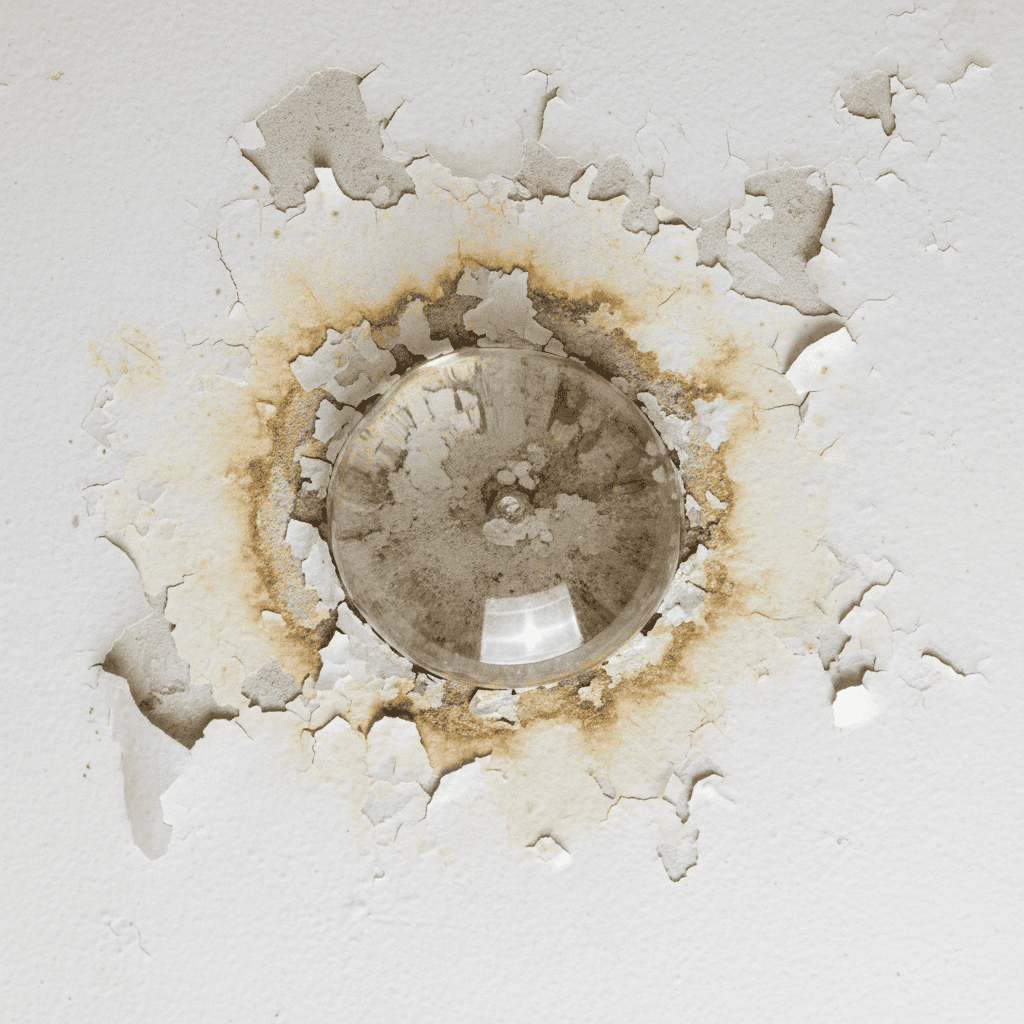
Pipe boot & vent boot failures
The rubber gasket around a plumbing vent stack cracks in 7-12 years. We replace with a lead boot or a Bullet Boot for the 50-year fix. Most common single-source leak we see.
Most repairs $300-$650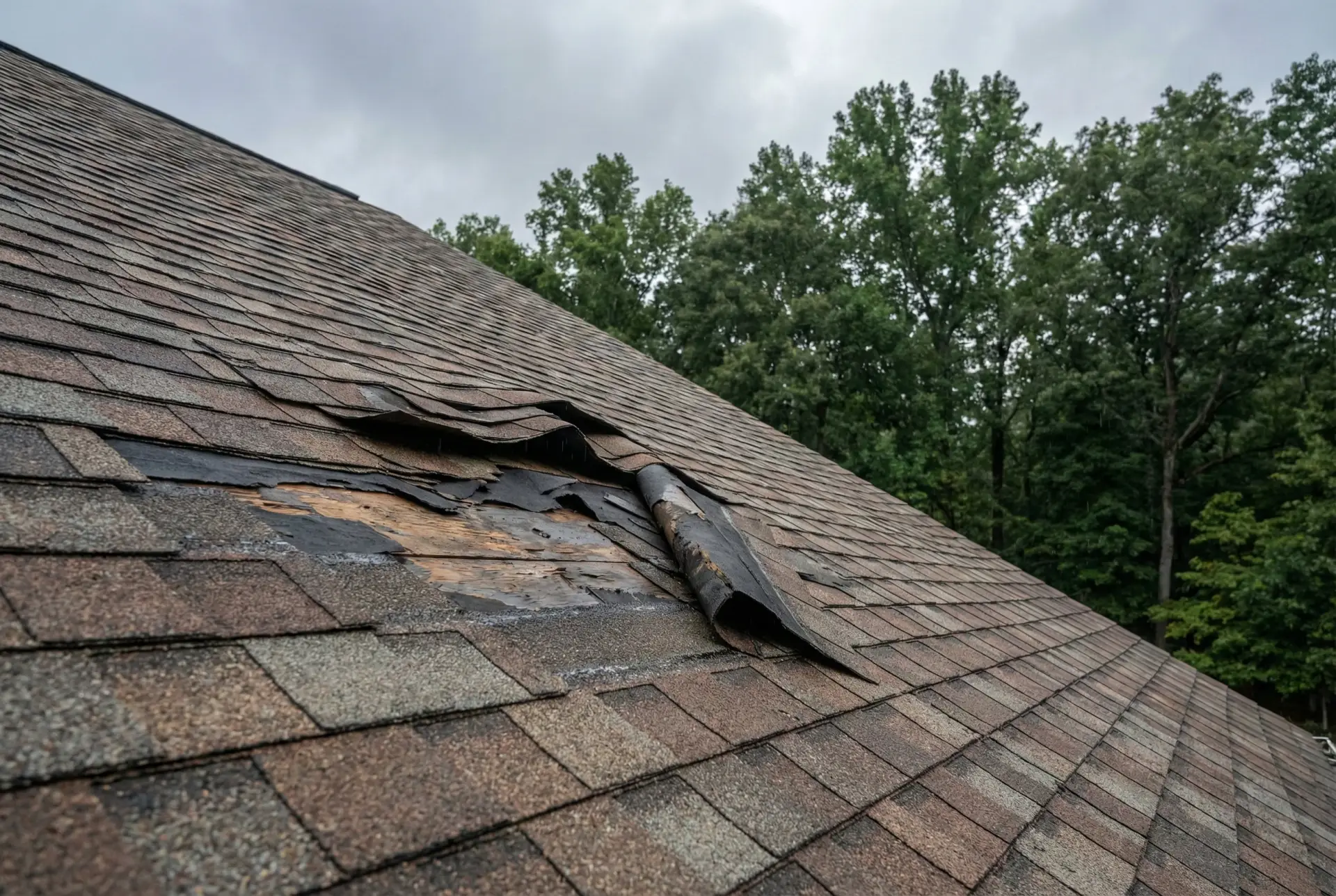
Wind-lifted & missing shingles
Wind events along the Bay routinely lift shingles where the nailing pattern was below code. We re-nail or replace the affected courses with matching Owens Corning Duration so the warranty stays intact.
Insurance walkthrough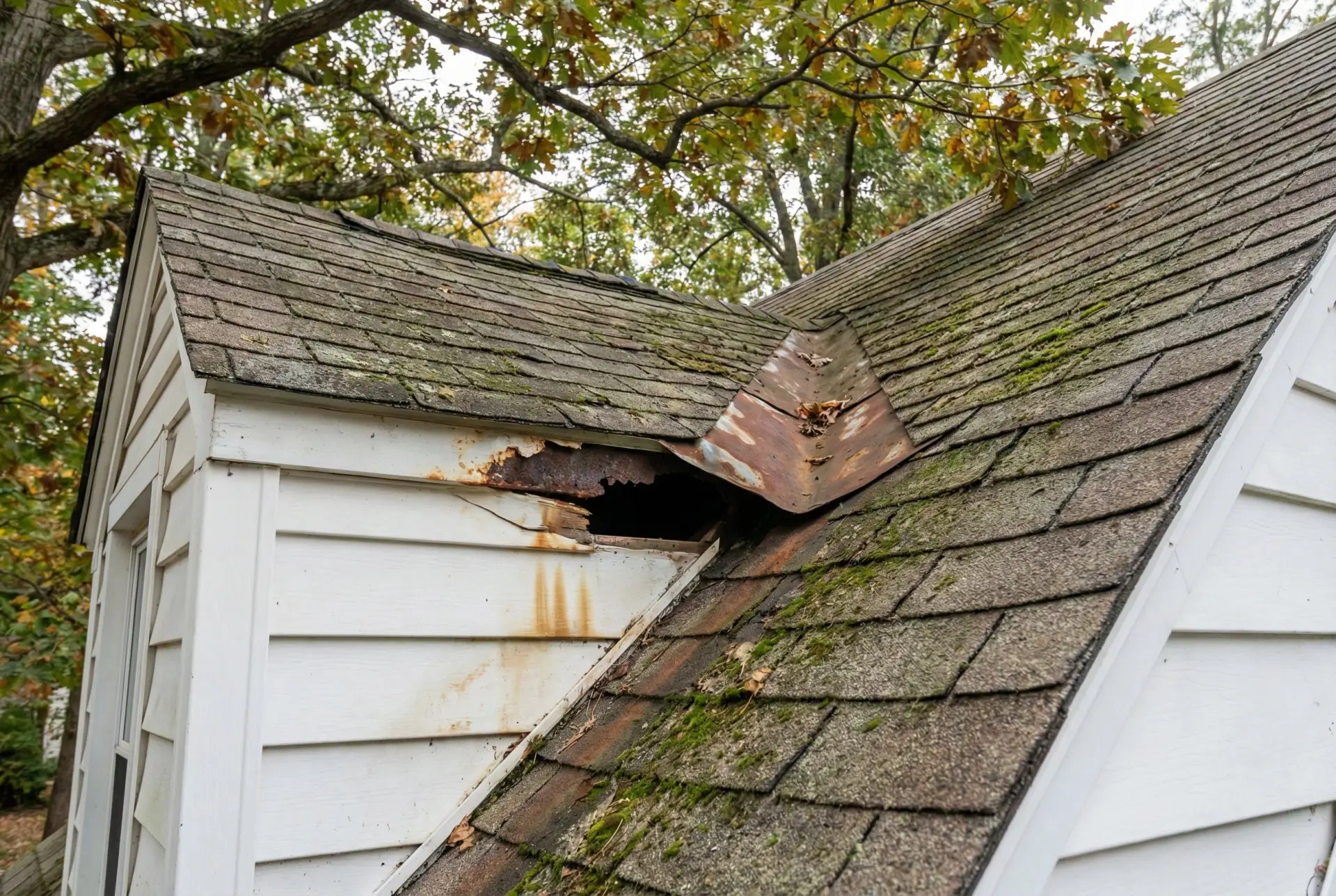
Sidewall & chimney flashing
Step flashing and chimney counter-flashing are where 70% of "mystery leaks" originate. JDH rebuilds with new aluminum step + counter-flash, mortared into the chimney, not caulked over.
Diagnose with PCC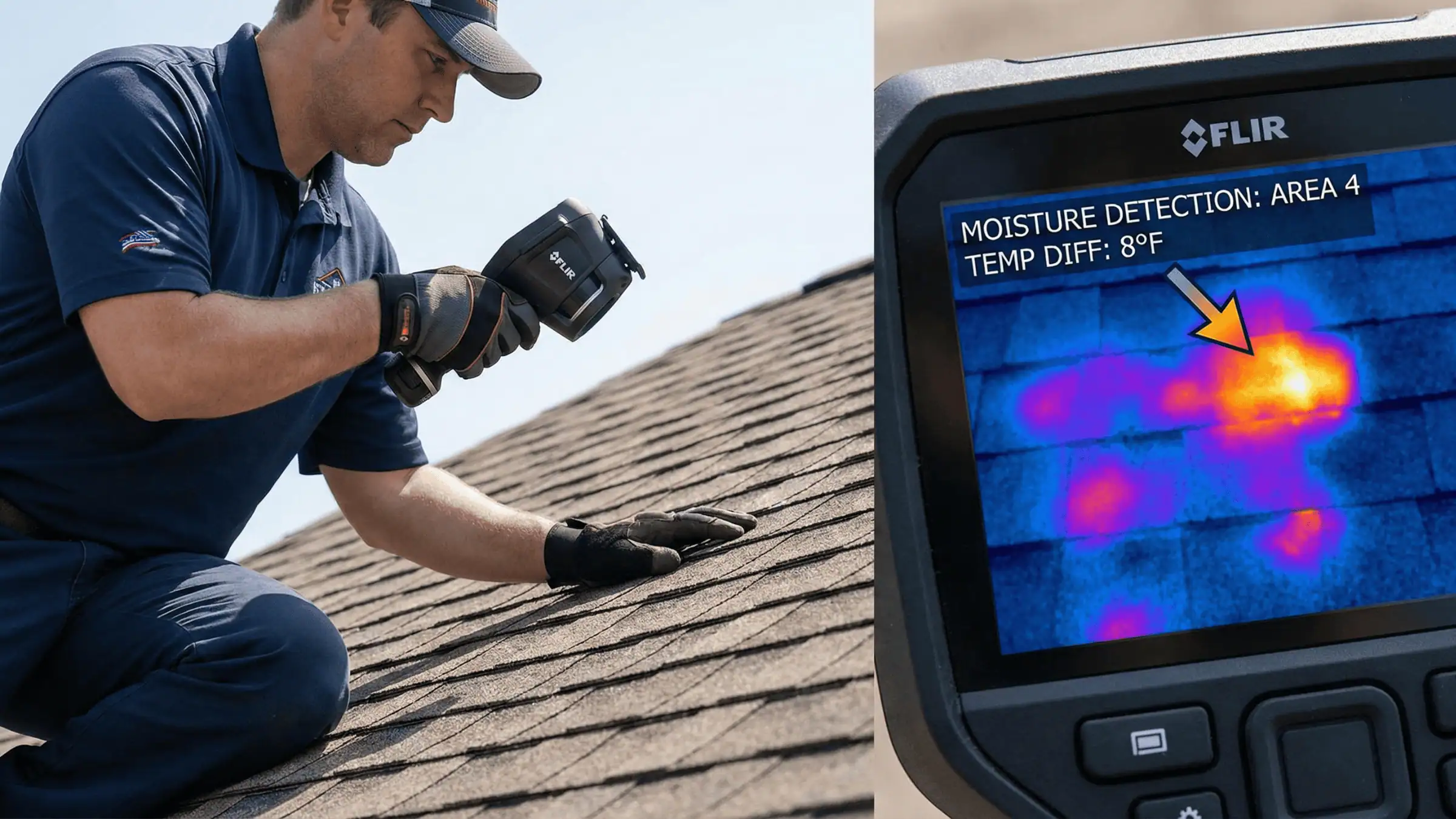
Valley & ridge leaks
Open-metal valleys and ridge-vent transitions accumulate debris and reverse-pitch over time. We re-bed valleys with ice-and-water shield and replace ridge vent with the proper baffle.
Flashing reference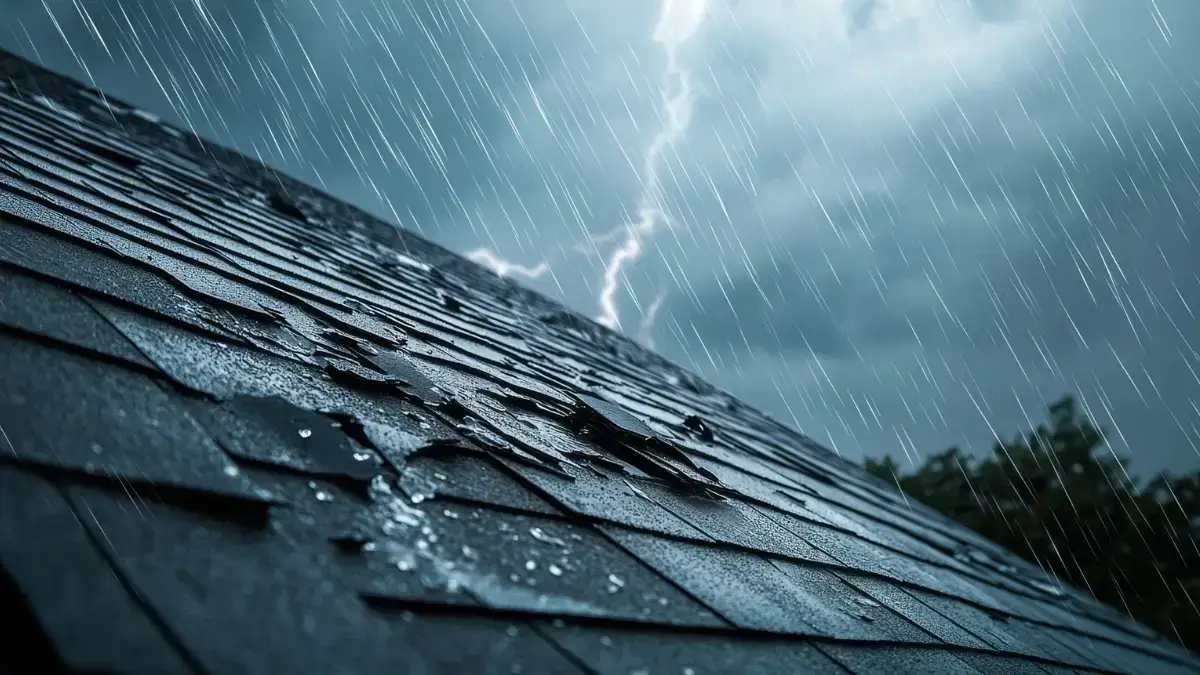
Hail bruising & impact damage
Hail strikes that don't puncture still bruise the asphalt mat, accelerating shingle failure by 5-10 years. HAAG measurement protocol determines if the strike is policy-covered. We document either way.
Insurance claim help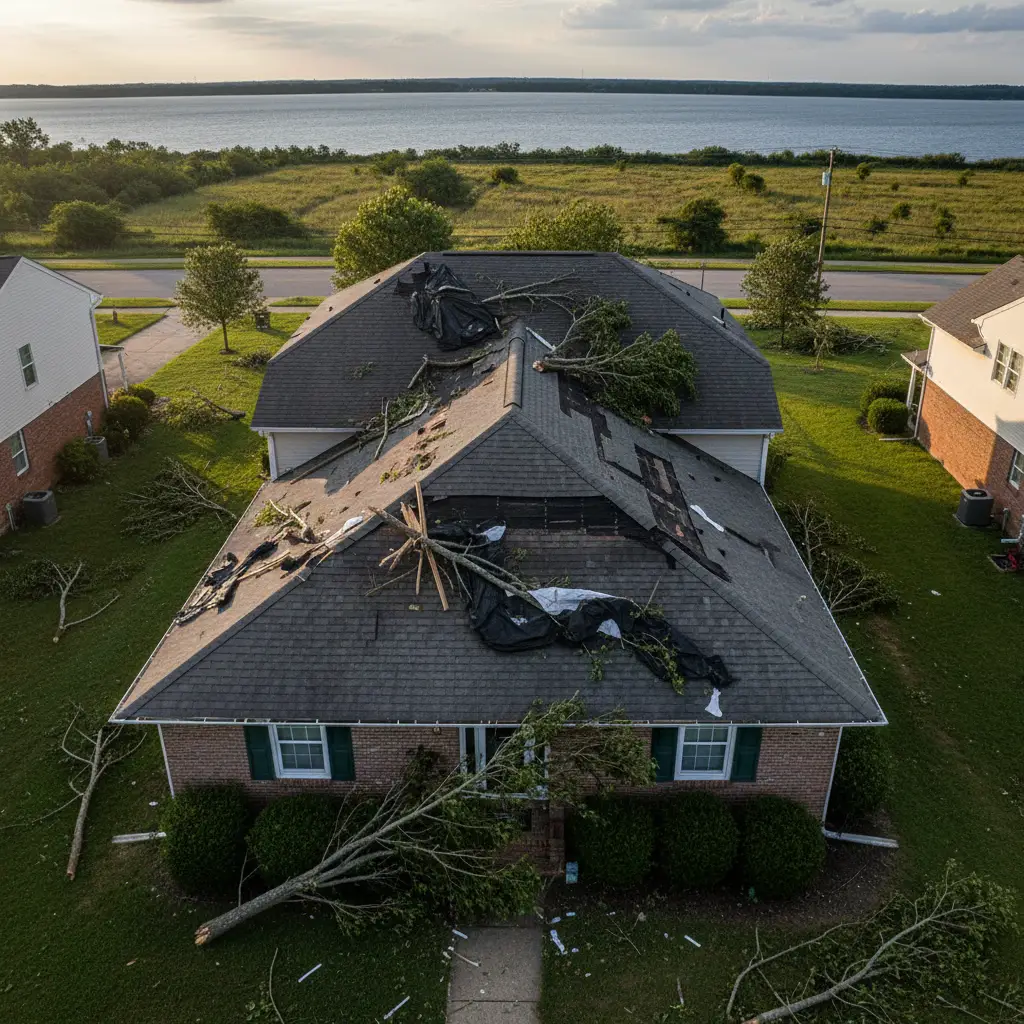
Tree-impact section repairs
Limb impact rarely punctures cleanly. We open the affected section, replace damaged decking, and re-shingle with matching material. If structural members are compromised, it's a replacement, not a repair.
Emergency dispatchJDH won't repair a roof if the repair is 35% or more of replacement.
The number was picked because charging someone more than 35 percent to repair a roof they'd have to replace soon anyway isn't ethical. It's the same written rule applied to every estimate.
What it looks like in practice: a 10-year-old roof with multiple slope failures comes in at $7,200 to repair properly. Replacement is around $22,000. The repair lands at 33% · under the threshold, repair makes sense. The customer's price doesn't go up later and the repair carries our 5-year workmanship warranty.
The same roof a year later, after another storm, comes back with the same scope plus a chimney rebuild. Now the repair quote is $9,200. Replacement is still around $22,000. That's 42% · over the threshold. We tell the homeowner the truth, walk through the repair-vs-replace decision and replacement cost options, and apply the diagnostic fee as deposit if they move forward.
Where the “25% Rule” you've heard of actually comes from.
If you've Googled repair vs replace, the number you saw was probably 25%, not 35%. Worth knowing where 25 comes from: the Florida Building Code. After Hurricane Andrew, Florida code officials wrote a re-roofing rule (in the Florida Building Code Existing Building chapter, often called the “25% Rule” on contractor forums) that says if more than 25 percent of a roof is repaired or replaced inside any 12-month period, the entire roof has to be brought up to current Florida wind-uplift code.
It's a hurricane-country regulatory trigger, not a homeowner decision framework. Maryland and Virginia building codes don't carry that provision. Contractors elsewhere have repurposed the 25 percent number nationally as a loose heuristic, but the Florida rule and a roofer's repair-vs-replace recommendation aren't measuring the same thing:
- 25% (Florida code): Are you legally required to re-roof? “Yes” once you've touched a quarter of the area inside 12 months.
- 35% (JDH ethics): Is repair still the right value for the homeowner? “No” once the repair would burn more than a third of what a full replacement costs on the roof in front of us.
The 35 percent number is where JDH inspectors kept landing after looking at thousands of MD and VA roofs. It's the cost-share point where repair stops being a good deal for the homeowner regardless of what any building code requires. See the longer comparison on repair vs replace.
From your call to a documented repair, step by step
Five steps, same process every time, whether it's a single pipe boot or a multi-slope storm repair.
1
You call · we answer live 24/7
+
A real JDH team member takes the call, not an answering service. We confirm your address is inside our 90-mile service radius, ask what you're seeing, and schedule the same-day or next-business-day inspection. Emergency leaks get the 15-minute callback path. See emergency repair.
2
HAAG-certified inspection · PCC Method
+
A Design Specialist (the JDH name for our field inspectors: Joey Walzel, Tom Raley, Sam Carts, or Matt Brown, with Inspector Manager Brian McClees leading the team) walks the roof with FLIR thermal, drone, GoPro, snake camera, moisture meter, and HAAG shingle gauges. Every finding is documented as Problem, Cause, Consequence: the PCC Method.
3
Digital Analysis video delivered
+
Before we leave the property, you receive a written photo and video report. Every problem is shown on camera with PCC commentary. If a finding is policy-covered, the documentation is structured the way insurance carriers expect, though JDH does not act as a public adjuster.
4
35% Rule applied · written quote
+
The repair quote runs through the 35% Rule. Under threshold, you get an itemized written repair quote with material brand and color named on the contract. Over threshold, we walk through the replacement cost options instead and credit the inspection fee toward whichever path you choose.
5
Repair performed · 5-year warranty
+
JDH installs Owens Corning shingles exclusively, color-matched to your roof. Repairs carry the JDH 5-year workmanship warranty plus any pass-through manufacturer warranty on the affected materials. Magnetic sweeper runs at end of day. Dump trailer stays on the street, not the lawn.
Five brands. Every certification independently verifiable.
JDH installs five manufacturer-certified exterior brands. We don't carry every shingle on the market because we don't believe in installing what we wouldn't put on our own house.
Top 1% of OC contractors nationally. Duration architectural shingles, 50-year non-prorated Platinum Protection warranty. Used on every roof repair where we can color-match the original.
Verify certificationSkylight flashing repairs (a common roof-repair sub-category) require certified installation to maintain the manufacturer warranty. JDH does step-flashed perimeter rebuilds and dome replacements.
Skylight repairStorm-impact siding repairs alongside roof work. HardiePlank fiber cement, color-matched and nailed to spec to maintain the 30-year warranty.
JDH sidingStorm-impact doors and windows replaced alongside the roof repair when the same event damaged multiple components. ProVia Endure + Signet, factory-certified install.
Windows & doorsGutter failures alongside roof repair (overflow staining, fascia damage) get the aluminum micro-mesh upgrade with lifetime no-clog warranty backed by OC.
Gutter guards5 Maryland counties, 3 Virginia counties, 90-mile radius
JDH dispatches repair crews from St. Leonard, MD. Same-day diagnostic inspection across our core counties; next-business-day for the expansion footprint.
JDH Remodeling headquarters at 4821 St Leonard Rd, St Leonard MD 20685. View on Google Maps for reviews and hours.
Roof Repair FAQ
How do I know if my roof needs repair or full replacement? +
JDH applies the 35% Rule: if the repair quote lands at 35 percent or more of the replacement cost, we recommend replacement. Under threshold, repair makes sense. The decision is the same for every customer: written, not negotiated. A free HAAG-certified inspection gives you the data to make the call.
How much does a roof repair cost in Maryland? +
Typical repairs run $1,200 to $3,600 per job with a $1,000 minimum. Single-source repairs (pipe boots, single shingles) sit at the lower end. Multi-slope storm damage and chimney flashing rebuilds at the higher end. Final price depends on access difficulty, material match, and structural complexity. We quote it in writing before any work starts.
Is the inspection actually free? +
Yes, for homeowners. The HAAG-certified diagnostic is free and includes a written photo and video report. About 1 in 4 inspections result in no recommended work because JDH inspectors aren't paid on commission. Non-homeowner inspections (real estate, insurance appraisal) are $500, credited toward any repair or replacement we do.
Does my homeowner's insurance cover roof repair? +
For damage from a covered peril (wind, hail, falling tree, lightning) usually yes, after your deductible. JDH documents damage the way insurance carriers expect, including HAAG impact measurements where applicable. We do not act as public adjusters; the coverage decision is the carrier's. See the full claims walkthrough for the step-by-step.
What's the difference between roof repair and emergency roof repair? +
Emergency repair stops active water intrusion same-day (tarp, sealant, or temporary dry-in) and prioritizes stabilization over diagnosis. Standard repair is scheduled, fully documented, and aimed at the permanent fix. Both use the same HAAG methodology. Active leak right now? See emergency repair. Documented problem, not actively leaking? You're on the right page.
How long does a typical repair take? +
Single-source repairs (pipe boot, single shingle replacement, ridge cap section) are 2-4 hour visits. Multi-slope repairs and flashing rebuilds run a full day. Major storm repairs with decking replacement can extend into a second day. The written quote includes a scheduled day and arrival window. No all-day-arrival window guessing.
What warranty comes with a JDH repair? +
Five-year workmanship warranty on the repair itself. Materials carry the manufacturer's pass-through warranty, typically Owens Corning's Duration shingle warranty if we matched the existing system. We register the warranty on your behalf within two business days of completing the work.
Can you match my existing shingle color? +
Yes for any Owens Corning Duration installation done in the last 15 years. We pull the original color from the shingle wrapper or from our records if JDH did the original install. Color match on older or non-OC roofs depends on shingle availability. We'll tell you up front if a perfect match isn't possible and show you what's closest.
Do you charge extra for steep or high roofs? +
Steep-slope (>9:12) and three-story roofs may carry an access surcharge for the additional safety setup (roof hooks, harness anchors, pitch hoppers). We quote it up front before any work. Most JDH Design Specialists are HAAG-trained to walk pitches other contractors won't, so the surcharge is rarely the difference between getting the repair done and not.
How do I verify your Maryland or Virginia license? +
Cross-check MHIC #137491 on the Maryland Department of Labor MHIC search, and Virginia Class A #2705192986 on the Virginia DPOR license lookup. Both are public and confirm current status. JDH also sends the Certificate of Insurance ($8M+ combined) before any contract is signed.
Verify everything on this page
Every credential and standard referenced above is publicly verifiable. Don't take JDH's word for it.
-
1
HAAG Education Inc.HAAG Certified Inspector Directory
The forensic inspection credential held by the majority of insurance adjuster field staff. Verify Jim Dodson's HCI Master Level credential (#992109047) directly with HAAG.
haageducation.com → -
2
Maryland Department of LaborMHIC Contractor License Search
Look up MHIC #137491 to confirm active status, trading name, and any disciplinary history.
dllr.state.md.us → -
3
Virginia DPORVirginia Contractor License Lookup
Confirm Class A #2705192986 on the Department of Professional and Occupational Regulation database.
dpor.virginia.gov → -
4
Owens CorningPlatinum Preferred Contractor Locator
OC's official directory of Platinum Preferred contractors. JDH appears in the Southern Maryland and Northern Virginia listings.
owenscorning.com →
Get a HAAG-Certified Roof InspectionNo Pressure. No Pitch. Just the Truth.
A HAAG Master Certified inspector will walk your roof, photograph every area of concern, and email you a written report before we leave. About 1 in 4 inspections result in no recommended work because we are not paid on commission.
- 60-90 minutes on-site · written report before we leave
- PCC Method applied to every finding
- The 35% Rule decides repair vs replace honestly
- Documentation usable by insurance adjusters and lenders
Schedule Your Free Inspection
Same-day or next-business-day response. We'll confirm by phone within the hour.
Request Received
A real person from JDH Remodeling will follow up shortly.
- Within minutes: confirmation email and text
- Same day: a call to confirm a time that works
- On site: 60-to-90 minute forensic inspection with full photo report
More Questions? See the complete Roofing FAQ with 30 answered questions across 8 categories — cost, materials, financing, warranties, permits, and contractor selection.
From the JDH Team When you're ready to take the next step, work with our family-run Mid-Atlantic home base. JDH backs every job with our full Maryland and Virginia roofing services and flexible roofing financing options for every homeowner.
From the JDH Team When you're ready to take the next step, work with our family-run Mid-Atlantic home base. JDH backs every job with our full Maryland and Virginia roofing services and flexible roofing financing options for every homeowner.